
A Visual Guide to the Iberian Peninsula: High-Resolution Regional Maps
Spain is home to the largest vineyard acreage in the world, yet it remains one of the most misunderstood wine nations. It is a country of extreme geographical contradictions: the verdant, rain-soaked valleys of “Green Spain” in the northwest share a border with the arid, high-altitude plateau of the Meseta, while the Mediterranean coast offers a completely different viticultural reality.
To master Spanish wine, one must look beyond the bottle and look at the land. These high-resolution maps are designed to untangle the complex web of DOs (Denominaciones de Origen) and DOCas. They provide the visual context needed to understand how the Atlantic Ocean influences the Albariño of Rias Baixas, or how the elevation of the central plateau preserves acidity in the old-vine Garnacha of the Sierra de Gredos.
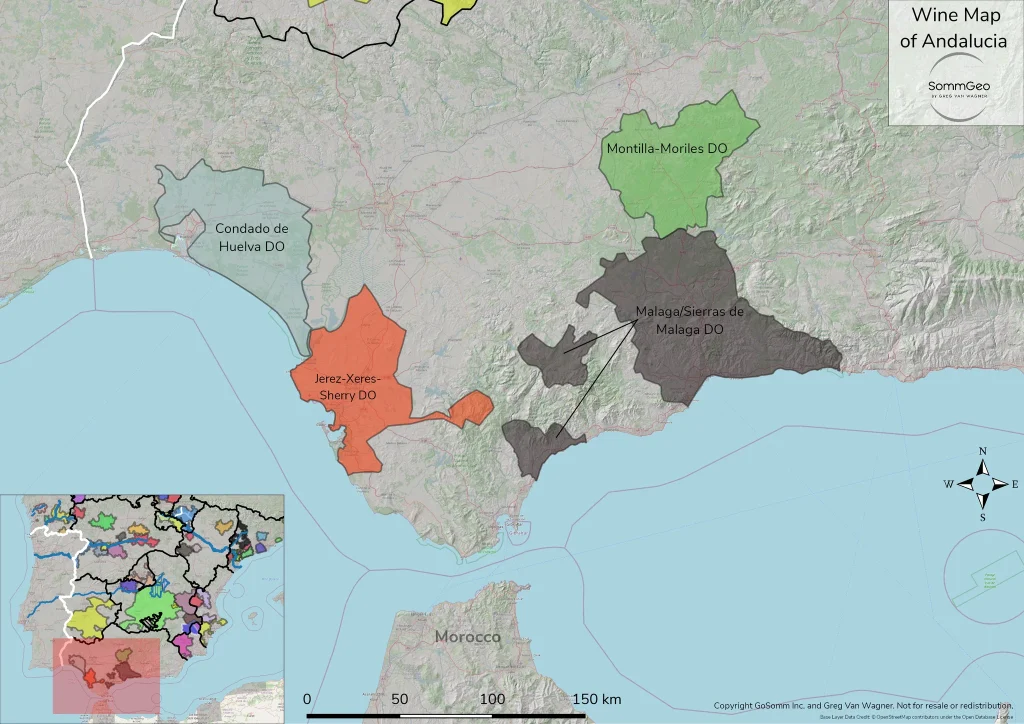
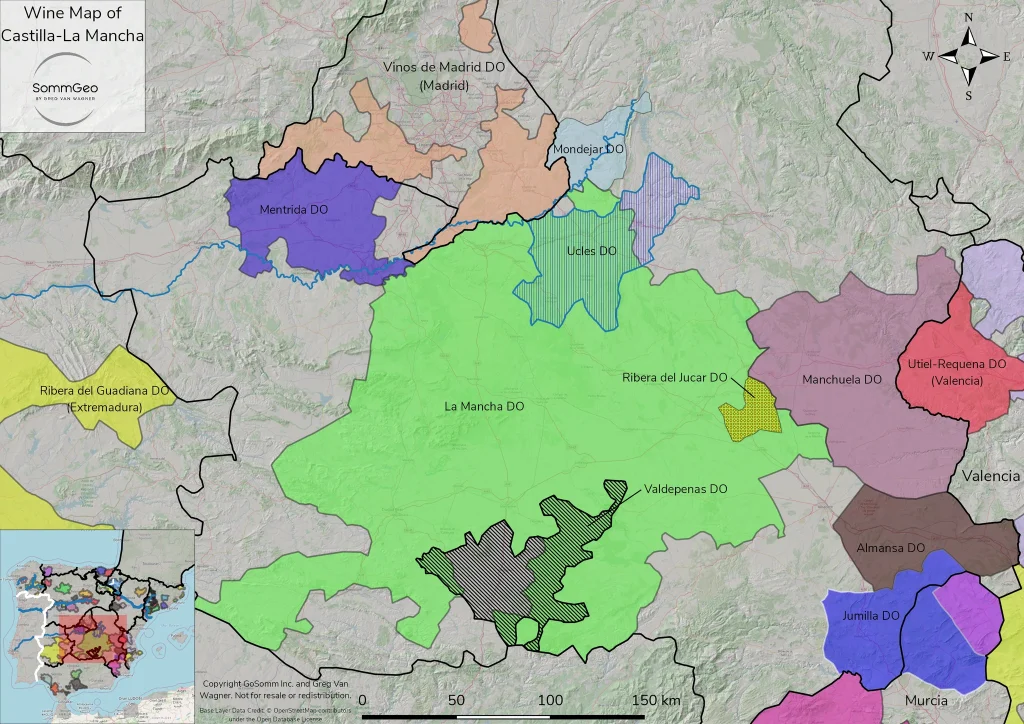
Unlock the gallery below to explore the detailed wine geography of:
- Galicia & The Northwest: The river valleys of Valdeorras and the sub-zones of Rias Baixas.
- Catalonia & The Ebro: From the steep llicorella slopes of Priorat to the Cava heartland of Penedès.
- The Central Plateau: The vast expanse of Castilla-La Mancha and the emerging quality zones of Madrid.
- Andalucia: The historic Sherry triangle and the solera regions of the south.
- Basque Country & The North: The coastal enclaves of Txakoli.

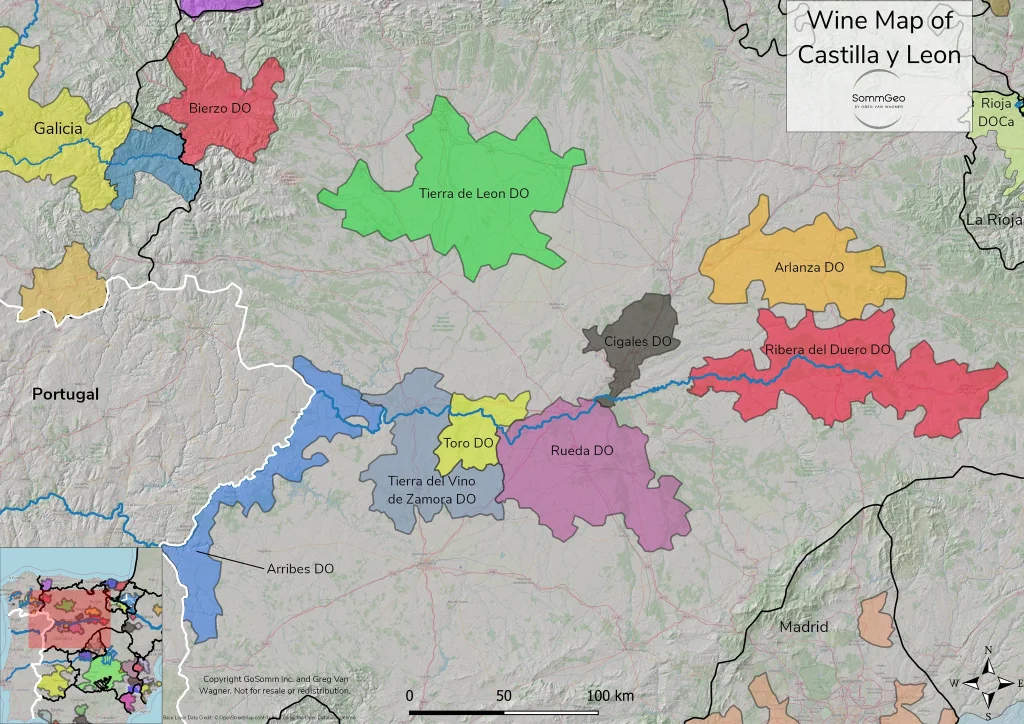




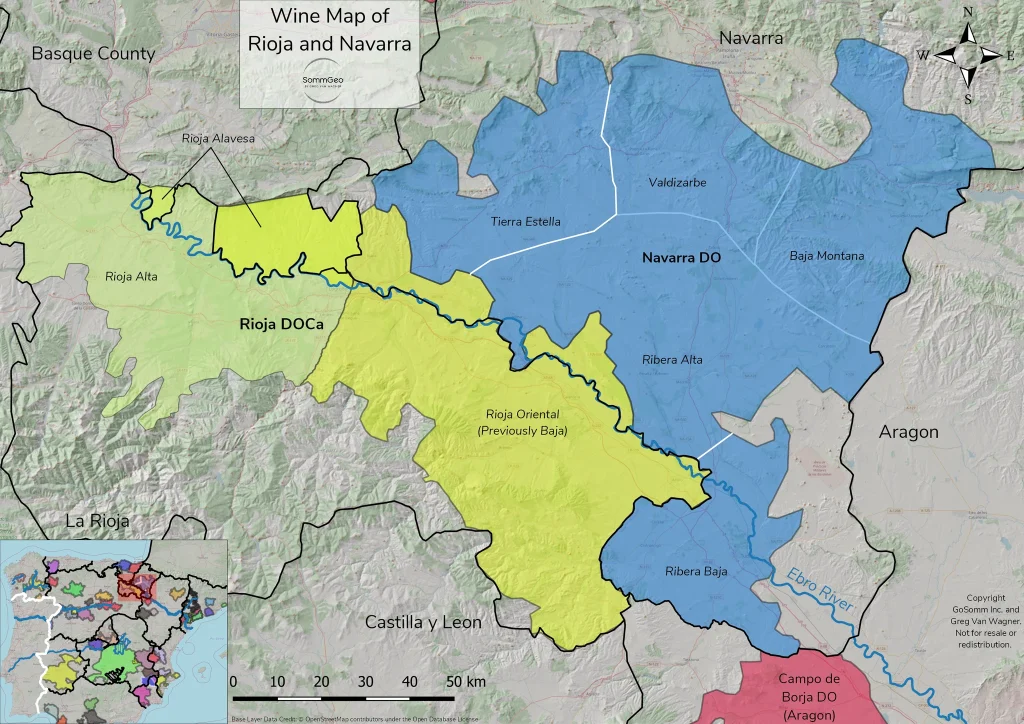

Region Breakdown: What These Maps Reveal
Galicia: The Atlantic Influence
Known as “Green Spain,” this region is defined by its proximity to the ocean and its river systems.
- Rias Baixas: Our map breaks down the five sub-zones, showing how Val do Salnés hugs the coast for maximum salinity, while Condado do Tea sits further inland along the Miño River.
- The River Valleys: Trace the path of the Sil and Miño rivers through Ribeira Sacra and Valdeorras, visualizing the steep, terraced canyons that make viticulture here so heroic.
Catalonia: Mediterranean Power
The northeast offers a study in elevation and soil diversity.
- Priorat & Montsant: This map perfectly illustrates the unique “donut” geography, where the Montsant DO almost completely encircles the Priorat DOQ. It highlights the rugged, isolated nature of Priorat’s llicorella hills.
- Penedès & Cava: See the proximity of the Penedès and Alella vineyards to Barcelona and the sea, contrasting with the inland, continental climate of Costers del Segre.
Central Spain: The High Meseta
The center of Spain is a vast, high-altitude plateau that is home to some of the world’s most extensive plantings.
- Castilla-La Mancha: Grasp the sheer scale of La Mancha DO—the largest continuous vine-growing area in the world.
Andalucia: The South
History runs deep in the south, where heat and albariza soil define the wines.
- The Sherry Triangle: Visualize the coastal position of the Jerez-Xérès-Sherry DO, showing the critical influence of the Atlantic winds (the Poniente) on the maturation of Flor.
- Montilla-Moriles: See how this region sits far inland, baking in the Cordoba heat, which naturally produces high-sugar grapes for unfortified sweet wines.
Go Deeper: Interactive & 3D Tools
While the static maps above are perfect for study and presentations, SommGeo offers powerful ways to interact with the Spanish landscape dynamically.
- Fly Through the Vineyards: Experience the dramatic topography of the peninsula first-hand. Our guided 3D tours take you from the Pyrenees to the Strait of Gibraltar.
- Quick Reference (Fast Maps): Rapidly access boundaries and topography for service or study.
- Spain Fast Map (2D Reference)
- Northwest Spain 3D Fast Map (Galicia/Bierzo)
- Northeast Spain 3D Fast Map (Rioja/Catalonia)
- Central & Southern Spain 3D Fast Map
- Canary Islands 3D Fast Map
- Build Your Own Views: Need to isolate specific DOs or create a custom view for a class? The Spain Map Maker puts the control in your hands.
Login or Subscribe to SommGeo to view and download these high-resolution maps in full detail.