
Southern Italy Wine Map: 121 DOC and DOCG Zones in 3D
Campania, Puglia, Basilicata, Calabria, Abruzzo, Molise, Sicily, Sardinia, and the volcanic islands in full 3D terrain.
This interactive 3D Southern Italy wine map shows 121 DOC and DOCG zones across eight regions on real terrain: Campania with Taurasi, Fiano di Avellino and Greco di Tufo, Basilicata and Aglianico del Vulture, Puglia from Castel del Monte to Primitivo di Manduria and Salice Salentino, Calabria and Cirò, Sicily with Etna, Cerasuolo di Vittoria, Marsala and Pantelleria, Sardinia with Vermentino di Gallura and Cannonau, and Abruzzo and Molise on the Adriatic, drawn in 3D by SommGeo. Fly between regions with the bookmarks, check elevation and slope, run the daylight animation and click any zone for its grapes and rules. The interactive map is part of SommGeo membership, which starts with a free 15-day trial.
- Zones on the map: 121, every boundary clickable: 14 DOCGs and 107 DOCs across 8 regions
- Volcanoes: Etna’s vineyards climb to about 1,000 meters (3,280 feet) on lava and ash, Taurasi sits on volcanic soils in the Irpinia hills, and Aglianico del Vulture grows on the slopes of an extinct volcano in Basilicata
- Signature grapes: Aglianico, Fiano, Greco and Falanghina in Campania; Primitivo and Negroamaro in Puglia; Nero d’Avola, Nerello Mascalese, Carricante and Grillo in Sicily; Cannonau and Vermentino in Sardinia; Montepulciano in Abruzzo
- Puglia: The flat heel of Italy and one of the country’s biggest wine producers by volume, with 32 zones on the map, four of them DOCGs around Castel del Monte and Manduria
- Islands: Sicily is the largest island in the Mediterranean and Sardinia the second; between them they carry 42 of the zones on the map, Pantelleria and the Aeolian Islands included
- 3D tools: Tilt and rotate the terrain, bookmarks to fly between areas, elevation profile readouts, daylight and shadow animation and layer controls
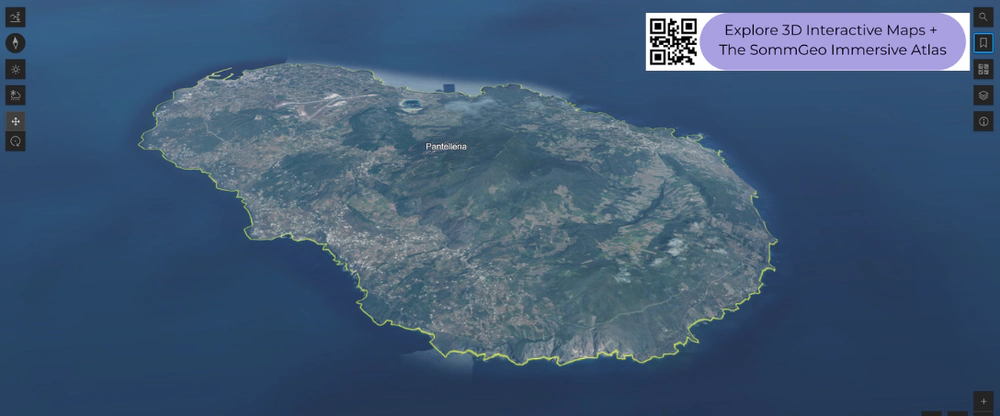
Southern Italy is where ancient grape varieties meet some of the most dramatic terrain in the Mediterranean. From the volcanic soils of Campania and Mount Etna to the plains of Puglia, from the highlands of Basilicata to the wind-swept island of Pantelleria, the geography is as diverse as anywhere in the country. Indigenous varieties like Aglianico, Nero d’Avola, Nerello Mascalese, and Fiano are producing wines of real ambition and site-specificity. This map covers the DOC and DOCG zones of Southern Italy with detailed popup data. The bookmarks are the best way to navigate: use them to fly between Campania, Puglia, Sicily, and the islands.
Unlock the Full SommGeo Toolkit
Gain exclusive access to our entire suite of premium features, including interactive Map Makers, immersive 3D Tours, high-resolution classic Maps, and advanced analytical tools.
Start Free TrialWhat You’ll Explore
This 3D Fast Map covers the DOC and DOCG zones of Southern Italy, including the mainland regions, Sicily, and the smaller islands. Click any mapped appellation for detailed popup content covering grape varieties, classification details, and geographic specifics. Start with the bookmarks to fly between Campania, Puglia, Sicily, Etna, and the islands. Then use the layer controls to filter by regional grouping and manage the visual complexity.
- Southern Italy’s DOC and DOCG zones mapped with detailed popup data
- Bookmarks to fly directly between Campania, Puglia, Sicily, Etna, and the islands
- Elevation profile tool for measuring vineyard altitude and slope gradients
- Daylight and shadow animation to visualize aspect and sun exposure
Key Regions in Focus
Campania and Basilicata
Campania’s volcanic geography defines its wines. Taurasi, in the hills east of Avellino at 400 to 700 meters (1,310 to 2,300 feet), is the home of one of Italy’s most powerful and age-worthy reds, built on Aglianico grown in volcanic soils. The soils are volcanic (tufo, ash, pumice) over clay, and the altitude preserves acidity in this late-ripening grape. Fiano di Avellino and Greco di Tufo, from the same highlands, produce structured, mineral whites. Basilicata contributes Aglianico del Vulture, grown on the slopes of Monte Vulture at 200 to 800 meters (655 to 2,624 feet), producing a slightly different, often more approachable expression.
Sicily and Etna
Sicily is Italy’s largest island and one of its most dynamic wine regions. Etna is the headline: Nerello Mascalese and Nerello Cappuccio grow around the volcano at 400 to 1,000 meters (1,310 to 3,280 feet) on lava, ash, and pumice, producing reds with transparency and structure that have drawn comparisons to Burgundy. Western Sicily around Marsala grows Grillo, Catarratto, and Nero d’Avola on limestone, while the southeast produces Cerasuolo di Vittoria (the island’s only DOCG) from Nero d’Avola and Frappato. Pantelleria, the volcanic island between Sicily and North Africa, produces its famous Passito from Zibibbo trained in the alberello pantesco system.
Puglia and Calabria
Puglia is one of Italy’s largest wine-producing regions by volume, with long, flat, sun-drenched plains ideal for high yields. But the quality story is about specific zones with more interesting geography. Salento in the far south grows Primitivo and Negroamaro on terra rossa over limestone, while Gioia del Colle on the elevated Murge plateau at 300 to 500 meters (985 to 1,640 feet) produces a more structured, fresher Primitivo with aging potential. Castel del Monte occupies limestone hillsides where Nero di Troia shows character. Calabria, at the toe, is small but notable for Cirò (Gaglioppo on the Ionian coast). The elevation profiles reveal how dramatically the landscape shifts from coastal plains to highland zones.
DOCGs and principal DOCs on this map (36)
All 14 DOCGs and 22 principal DOCs, by region. The 3D map shows all 121 zones, 85 further DOCs included, with every boundary on real terrain plus a full profile for each.
| Appellation | Level | Principal grapes |
|---|---|---|
| Abruzzo | ||
| Colline Teramane Montepulciano d’Abruzzo | DOCG | Montepulciano |
| Terre Tollesi | DOCG | Montepulciano, Pecorino, Passerina, Trebbiano |
| Montepulciano d’Abruzzo | DOC | Montepulciano |
| Molise | ||
| Molise | DOC | Tintilia, Falanghina, Chardonnay, Cabernet Sauvignon |
| Campania | ||
| Aglianico del Taburno | DOCG | Aglianico |
| Fiano di Avellino | DOCG | Fiano |
| Greco di Tufo | DOCG | Greco |
| Taurasi | DOCG | Aglianico |
| Costa d’Amalfi | DOC | Falanghina, Piedirosso, Aglianico |
| Falanghina del Sannio | DOC | Falanghina |
| Falerno del Massico | DOC | Aglianico, Piedirosso, Primitivo, Falanghina |
| Irpinia | DOC | Fiano, Greco, Aglianico |
| Sannio | DOC | Falanghina, Aglianico, Sangiovese, Coda di Volpe |
| Vesuvio | DOC | Coda di Volpe, Piedirosso |
| Puglia | ||
| Castel del Monte Bombino Nero | DOCG | Bombino Nero |
| Castel del Monte Nero di Troia Riserva | DOCG | Nero di Troia |
| Castel del Monte Rosso Riserva | DOCG | Nero di Troia, Aglianico, Montepulciano |
| Primitivo di Manduria Dolce Naturale | DOCG | Primitivo |
| Brindisi | DOC | Negroamaro, Malvasia Nera, Sangiovese |
| Primitivo di Manduria | DOC | Primitivo |
| Salice Salentino | DOC | Negroamaro, Malvasia Nera, Chardonnay |
| Basilicata | ||
| Aglianico del Vulture Superiore | DOCG | Aglianico |
| Aglianico del Vulture | DOC | Aglianico |
| Calabria | ||
| Cirò Classico | DOCG | Gaglioppo, Magliocco, Greco |
| Cirò | DOC | Gaglioppo, Greco |
| Sicilia | ||
| Cerasuolo di Vittoria | DOCG | Nero d’Avola, Frappato |
| Alcamo | DOC | Catarratto, Nero d’Avola, Sauvignon Blanc |
| Etna | DOC | Nerello Mascalese, Nerello Cappuccio, Carricante |
| Faro | DOC | Nerello Mascalese, Nocera |
| Marsala | DOC | Grillo, Inzolia, Catarratto, Perricone |
| Pantelleria | DOC | Zibibbo (Muscat of Alexandria) |
| Sicilia | DOC | Grillo, Nero d’Avola |
| Sardegna | ||
| Vermentino di Gallura | DOCG | Vermentino |
| Cannonau di Sardegna | DOC | Cannonau (Grenache) |
| Carignano del Sulcis | DOC | Carignano |
| Vermentino di Sardegna | DOC | Vermentino |
Hopefully this index is useful on its own. To explore these regions interactively, with every boundary on real terrain and a full profile for each, start a 15-day free trial. To see what one of these maps is like first, a different map is unlocked for everyone every day. For a flat view of the same zones, see the Italy Fast Map.
Southern Italy 3D Wine Map: Frequently Asked Questions
What are the wine regions of Southern Italy?
Eight on this map. Campania around Naples and the Irpinia hills; Basilicata, small and mountainous, with Aglianico del Vulture; Puglia, the long flat heel; Calabria, the toe, with Cirò on the Ionian coast; Sicily, with Etna in the east, Marsala in the west and Cerasuolo di Vittoria in the south; Sardinia, with Vermentino in the north and Cannonau inland; and, on the Adriatic side, Abruzzo and Molise, which SommGeo’s Central Italy map leaves to this one. Together they hold 14 DOCGs and 107 DOCs.
What is Aglianico?
The great black grape of the south, late ripening, high in acid and tannin, and happiest on volcanic soil at altitude. Taurasi, in the Irpinia hills east of Avellino at 400 to 700 meters (1,310 to 2,300 feet), is its benchmark, with Aglianico del Taburno across the Sannio and Aglianico del Vulture on the extinct volcano in Basilicata as the other two DOCG homes. Young Aglianico is fierce; with a decade in bottle it turns to tar, dried cherry, smoke and leather, which is why the comparisons to Nebbiolo keep coming.
What makes Etna wine different?
Height and lava. The vineyards ring an active volcano on terraces of black lava, ash and pumice that climb from about 400 to 1,000 meters (1,310 to 3,280 feet), far higher than anywhere else in Sicily, so the climate is cool and the days long. Nerello Mascalese makes pale, scented, firm reds that read more like Burgundy or Barolo than like the sun-soaked Nero d’Avola of the lowlands, and Carricante makes sharp, saline whites, mostly on the east side. The contrade, the named vineyard districts, are now appearing on labels like crus.
What can the 3D map show that a flat map can’t?
You can tilt and rotate the terrain, fly between Campania, Puglia, Sicily, Etna and the islands with the bookmarks, read elevation and slope on the Taurasi hills, the cone of Monte Vulture, the Etna terraces and the Gallura granite, and animate daylight and shadows to see which slopes of the volcano catch the morning sun. For a flat view of the same zones, see the Italy Fast Map.
Is the Southern Italy 3D wine map free?
The region index on this page is free to use. The interactive 3D map itself, with clickable boundaries and a full profile for every region, is part of SommGeo membership, which starts with a free 15-day trial. If you want a feel for what one of these maps is like before signing up, SommGeo unlocks one map every day on a rotation, different every day, no signup needed. Today’s unlocked map is on the home page.
New to 3D Fast Maps? Learn how to navigate 3D terrain, use elevation profiles, animate sunlight, and get the most from your map.
3D Fast Maps Guide →Ready to explore Southern Italy’s wine regions in full 3D? Join 200+ wine organizations already using SommGeo.
Start Your 15-Day Free Trial $5/month billed annually after trial · Cancel anytimeMap Usage
Free for your own study and tastings. If you share or teach with a map, credit it visibly as Map: SommGeo (sommgeo.com). Commercial use requires a Commercial Embed License. See Map Usage, Credit and Licensing.
Map by Greg Van Wagner, SommGeo