
Southern Rhône & Provence Wine Tour
Blends over varietals, warmth over marginality, and a quality hierarchy hiding in plain sight beneath an ocean of Côtes du Rhône.
The Southern Rhône is a fundamentally different wine region than the north. The Northern Rhône is Syrah country, planted on steep, terraced granite slopes in a continental climate where ripening is hard-won and site expression is everything. The south is Mediterranean: warmer, drier, flatter, dominated by Grenache and built around blending as its foundation. Châteauneuf-du-Pape allows 13 grape varieties in the blend (the north allows small blending percentages in several appellations, but the emphasis is different). Côtes du Rhône, the region’s massive production base, ranges from forgettable to genuinely compelling depending entirely on who made it and where. Between those poles sits a hierarchy of crus that most wine drinkers never explore. Move south into Provence and the conversation shifts again: Bandol produces some of the most structured, age-worthy Mourvèdre-based reds in France, while the larger appellations like Ventoux offer serious value at volume. This Tour covers the full sweep, from the galets roulés of Châteauneuf to the limestone terraces of Bandol.
Unlock the Full SommGeo Toolkit
Gain exclusive access to our entire suite of premium features, including interactive Map Makers, immersive 3D Tours, high-resolution classic Maps, and advanced analytical tools.
Start Free TrialInside This Tour
This Tour covers the Southern Rhône’s cru hierarchy, the large-volume production zones, and Provence’s coastal appellations, with detailed pins on terroir, classification, and producer profiles. Every map frame is fully interactive. Don’t just watch the flythrough. Click, drag, zoom, and rotate the 3D terrain to explore from any angle, then click every pin for the full content.
- Châteauneuf-du-Pape: the 13 permitted varieties, galets roulés, and producer-level detail
- The cru hierarchy: Gigondas, Vacqueyras, Vinsobres, Cairanne, and their distinct characters
- Large production zones: Ventoux, Luberon, and Côtes du Rhône Villages explained
- Bandol: Mourvèdre on limestone and the case for long-term aging
- Southern Rhône vs. Northern Rhône: why they’re essentially different wine regions
- Producer profiles: Rayas, Beaucastel, Clos des Papes, Domaine Tempier, and more
A Closer Look
Châteauneuf-du-Pape
Châteauneuf-du-Pape is the Southern Rhône’s most prestigious appellation and, for many, the reference point for Grenache-based blending in the world. The famous galets roulés (large, rounded river stones) that cover many of the best vineyards absorb heat during the day and radiate it back at night, driving full phenolic ripeness. But not all of Châteauneuf sits on stones; sandy soils in the eastern part of the appellation produce a different, more elegant expression, and the limestone clay of certain sectors adds structure and freshness. The appellation permits 13 grape varieties (including whites like Clairette, Roussanne, Bourboulenc, and Grenache Blanc), though the reds are overwhelmingly Grenache-dominant. Châteauneuf-du-Pape Blanc has become a collector category in its own right, with blends varying wildly from estate to estate and capable of real aging potential.
The Crus and Production Zones
Below Châteauneuf sits a hierarchy that many wine professionals underestimate. Gigondas (Grenache and Mourvèdre on the flanks of the Dentelles de Montmirail) produces wines of real power and structure. Vacqueyras, its neighbor, tends toward a slightly more approachable style at lower prices. Vinsobres, promoted to cru status in 2006, makes concentrated Syrah-Grenache blends from elevated vineyards. Cairanne, the newest cru (2016), is increasingly recognized for serious, age-worthy reds.
Then there are the large production zones that form the backbone of Southern Rhône volume. Côtes du Rhône and Côtes du Rhône Villages together account for the vast majority of the region’s output, and quality ranges from bulk to genuinely interesting. Ventoux and Luberon, on the eastern edge, benefit from higher altitude and cooler conditions than the Rhône plain, producing wines of surprising freshness at prices that make them among the best values in southern France.
Bandol
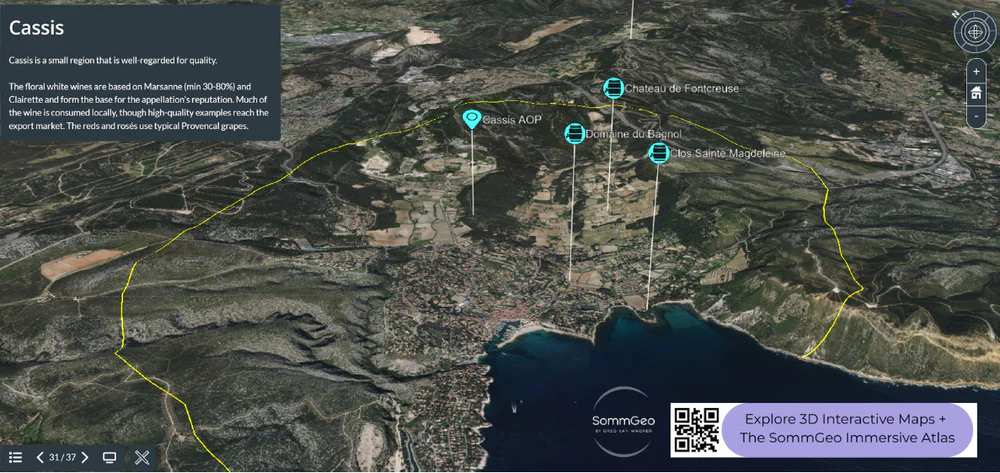
Bandol is the one Provence appellation that nobody dismisses. Located on limestone terraces above the Mediterranean between Marseille and Toulon, it’s the only French appellation where Mourvèdre must constitute at least 50% of the red blend (and typically reaches 70-95% at the top estates). The grape needs warmth to ripen fully, and Bandol provides it, but the limestone soils and maritime breezes add a freshness and mineral backbone that keeps the wines from becoming heavy. Reds require a minimum of 18 months in barrel before release, and the best age for decades, developing complex notes of leather, game, garrigue, and dark fruit. Bandol rosé is also exceptional, with more structure and depth than typical Provence pink.
Producers Worth Knowing
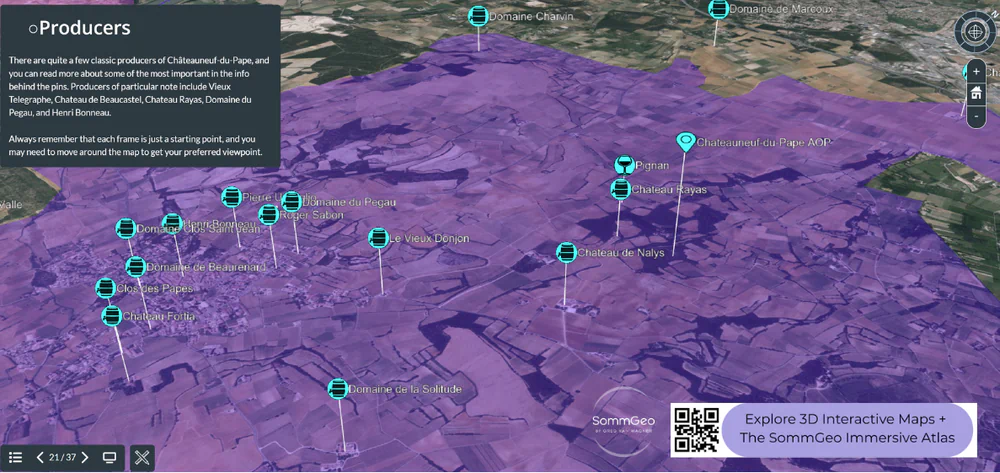
Château Rayas, Châteauneuf-du-Pape
Rayas is the outlier that proves the rule. Where most Châteauneuf estates farm sandy or stony soils in full sun, Rayas sits on cool, sandy, north-facing parcels surrounded by forest. The wine is 100% Grenache, yields are extremely low, and the result is one of the most Burgundian reds in the Southern Rhône: silky, perfumed, and deceptively light in color but with extraordinary concentration and aging potential. It’s one of the most expensive and sought-after wines in France, and the estate’s second wine (Pignan) and negociant label (Château de Fonsalette) are nearly as coveted.
Château de Beaucastel, Châteauneuf-du-Pape
The Perrin family’s estate is the most prominent advocate for Mourvèdre in Châteauneuf, typically blending it at 30% or more alongside Grenache, Syrah, and Counoise. The style is darker, more structured, and more savory than the Grenache-dominant norm, and the top cuvée (Hommage à Jacques Perrin, nearly pure Mourvèdre from old vines) is one of the region’s most age-worthy wines. Beaucastel also produces an outstanding Roussanne-dominant white and farms biodynamically across 130 hectares (321 acres).
Clos des Papes, Châteauneuf-du-Pape
Paul-Vincent Avril’s estate is the quiet overachiever of Châteauneuf. Clos des Papes produces just one red and one white (no second labels, no special cuvées), blending fruit from 24 separate parcels spread across every soil type in the appellation. The red is typically 65% Grenache with Mourvèdre, Syrah, and other varieties rounding out the blend. The style is polished and precise without being showy, with a structural backbone that makes it one of the most reliably age-worthy wines in the region, vintage after vintage.
Domaine Tempier, Bandol
Tempier is the estate that put Bandol on the international map. The Peyraud family championed Mourvèdre when the variety was in steep decline across Provence, and their wines proved that it could produce reds of genuine complexity and longevity. The estate bottles several single-vineyard cuvées (La Tourtine, La Migoua, Cabassaou) alongside the regular Bandol rouge, each reflecting a different aspect of the appellation’s terroir. The rosé is equally serious. For anyone who thinks Provence is just pink wine, Tempier is an exception.
Notable Vintages: Southern Rhône
The Southern Rhône’s warm climate delivers more consistency than France’s northern regions, but vintage still matters here. Among standout years, 2016 produced wines of exceptional concentration in color, tannin, and flavor, widely considered one of the great recent vintages for reds. 2010 was very successful, with precision and freshness allowing strong site expression across both reds and whites. 2019 delivered powerful, tannic reds with surprisingly fresh acidity; the best are built for serious aging.
On the difficult side, 2002 saw flood damage just before harvest, resulting in significant downgrading of fruit and a vintage best avoided. 2008 produced thin, gutless reds that lacked structure. 2014 was light in both alcohol and phenolics, with some red varieties struggling to reach full ripeness.
New to the Tours? Learn how to navigate frames, click pins for detailed producer and region profiles, and get the most from your 3D experience.
Tours Guide →Ready to go deeper into the Southern Rhône and Provence? Join 200+ wine organizations already using SommGeo.
Start Your 15-Day Free Trial $5/month billed annually after trial · Cancel anytime